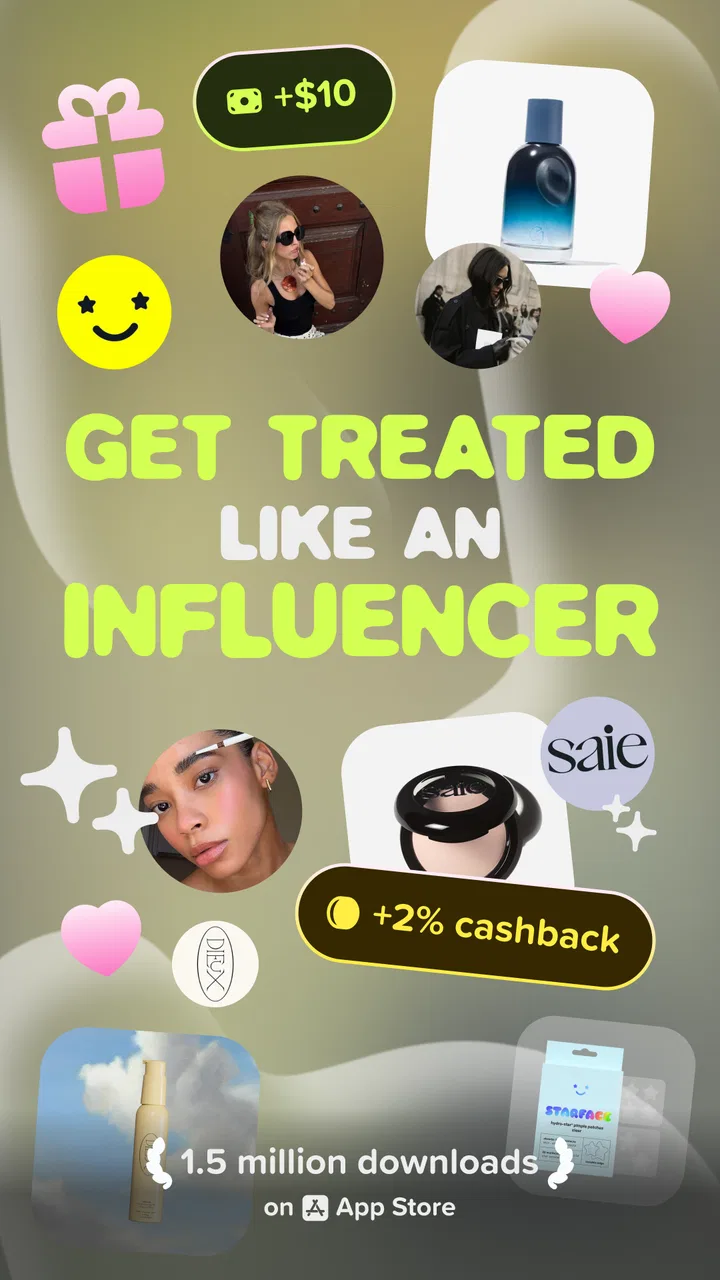
TYB: Brand Community Rewards
- 4.5
- Rating
- 100.00K
- Installs
- Free
- Price

 Analysis by App-foxy
I approached TYB: Brand Community Rewards as a social app rather than as a simple coupon tool. Its central promise is attractive: connect with brands, take part in their communities, and receive cash or rewards. In practice, the important question is not only what a reward might be worth, but also how comfortable you are with joining brand-led spaces and sharing attention with them. That balance shaped my experience more than the reward idea itself.
The app is free, aimed at Everyone, and comes from Try Your Best. It belongs in the social category, although it feels more focused than a conventional social network. You are not opening it mainly to follow friends or post about daily life. You are entering a brand-centered environment where participation and discovery are tied to possible rewards. That makes it a more purposeful experience, but also a narrower one.
Its store summary, “Cash and rewards from brands,” explains the appeal in a few words. The short description is simply “TYB,” so the real value comes from understanding how the app fits into your habits. I found it most interesting as an occasional check-in app: something to browse when I have a little time, rather than a replacement for the social platforms I already use every day.
You May Also Like

 Pandora - Music & Podcasts
Pandora’s Music Is Easy to Start, but Harder to Recover
Pandora’s strength is its low-effort path from a seed to a station. Its weak spot is how much confidence it asks you to place in connection, setup, and quiet recovery.

 8 Ball Pool
 Is Built on Rivalries, Rematches, and Routine
A close look at the rivalries, rematches, shared routines, and unanswered safety questions that turn a quick pool match into a persistent mobile community.

 Samsung Music
’s Quiet Strength Is Playing What You Already Own
Its reach comes less from spectacle than from dependable access to a personal library. That simplicity is both the app’s strongest retention engine and its ceiling.

 AccuWeather: Weather Radar
AccuWeather Review: A Quick, Clear Forecast for Everyday Decisions
For everyday plans, the best forecast is the one you can understand quickly. AccuWeather makes rain timing, radar, and local conditions easy to act on, with a few trade-offs.

 Hill Climb Racing
Why Hill Climb Racing Still Turns Crashes Into One More Run
A tiny car, a bumpy hill and one more upgrade: Hill Climb Racing keeps resurfacing because its simple chaos makes every near-miss feel personal.

 AliExpress - Shopping App
AliExpress Makes Global Shopping Feel Personal, but Shoppers Bear the Risk
AliExpress turns a global marketplace into a pocket-sized discovery engine. Its reach is useful, its shopping loop compelling, and its trade-offs easy to miss.
More From Our News Desk
View All News


What using TYB feels like when trust matters
TYB has a clear psychological advantage over ordinary brand advertising. Instead of seeing a promotion passively in a feed, you can approach a brand community with the expectation that your participation may lead to something useful. That shift makes the interaction feel more intentional. I am more willing to spend time with a brand when the app gives me a reason to do so beyond simply displaying an advertisement.
At the same time, rewards change the way I judge every screen. In a normal social app, I may tolerate a little clutter or an occasional irrelevant post. In a rewards-oriented app, I want to understand what I am doing, why it matters, and what I can reasonably expect afterward. If those steps feel vague, the reward loses some of its appeal. The app therefore works best when I treat it as a selective activity, not as effortless income.
The public response suggests that the concept has found an audience. TYB has an average rating of 4.5 from around 1.3 thousand ratings, with roughly 195 written reviews and more than 100 thousand installs. Those figures do not tell me whether every user has the same experience, but they do indicate that the app is not an empty experiment with no visible community around it.
I also noticed that the developer is named directly as Try Your Best, which is useful context when deciding whether to create an account. A named developer does not automatically settle questions about privacy or reward handling, but it gives users a clear party to identify when reviewing the app’s choices and support experience. For a platform that connects social activity with brands, that basic accountability matters.
Why the brand-community model is different
The closest alternatives are usually brand newsletters, loyalty programs, shopping apps, and mainstream social networks. Each has a different trade-off. A newsletter is quieter and easier to ignore, but it rarely feels interactive. A loyalty program may be clearer when you already buy from one retailer, but it can be limited to that company. A large social network offers more conversation, yet brand activity is mixed into a much broader stream.
TYB sits between those options. Its focus can make brand interaction easier to find, and the reward angle gives participation a practical purpose. The cost is that the experience depends heavily on whether the brands and communities available to you are genuinely relevant. If you are interested in a particular product area, that focus may feel useful. If you dislike brand-centered social spaces, the same focus can feel restrictive.
One of my more useful conclusions is that the app should be judged by the quality of the communities you actually want to join, not by the general idea of rewards. A person who already enjoys discovering products and discussing them may find a natural fit. Someone who wants a straightforward discount with no social layer may be happier using a standard loyalty card or direct promotion instead.
Account setup deserves a deliberate first look
When I install an app connected to brands and rewards, I do not rush through the first screens. I read the account prompts, check which choices are optional, and avoid granting access that does not seem necessary for the way I plan to use it. That habit is especially important here because the app combines social participation, commercial relationships, and account-based rewards.
I would recommend taking a minute to inspect every visible control during registration and in the account area. Look for notification settings, profile visibility choices, connected services, and any way to manage communication preferences. I am not treating a setting as private merely because it exists; I want to see whether the wording is understandable and whether I can change the choice later.
This is also where I would keep expectations realistic. A free app can still have a business model built around brand participation and user attention. “Free” describes the download price, not the amount of attention the service may request. Before I joined any community, I considered whether the likely benefit justified the information, notifications, and time involved.
The app is suitable for Everyone, but that age label should not replace supervision or good digital habits. Younger users may be especially attracted by the reward language, while the commercial context can be easy to overlook. I would encourage families to discuss what a brand community is, what information should remain private, and why a reward is never a reason to ignore an account prompt.
Permissions and data-sensitive moments
Trust is easiest to evaluate at moments where the app asks for something. I paid attention to the difference between a permission that supports a clear action and a request that feels unrelated to what I was trying to do. My rule is simple: if a feature still makes sense without a permission, I prefer to leave that permission off until I understand its purpose.
I would apply the same caution to profile information. A brand community may encourage a more expressive profile than a basic shopping account, but I do not see a reason to publish personal details simply to make an account look complete. I would use the minimum information needed to participate, then return later if a specific community genuinely benefits from more context.
There is another sensitive point that is easy to miss: activity can reveal preferences even when you do not write a public post. The communities you browse, the brands you follow, and the actions you take can create a picture of your interests. That does not automatically make the app unsuitable, but it does mean I would use it with a clear understanding that participation itself can be informative.
Notifications deserve similar attention. Reward apps can become noisy if every community update, invitation, or promotional prompt is allowed to interrupt the day. I prefer notifications that help me act on something I deliberately chose, rather than alerts that pull me back simply because the app wants more time. Turning down unnecessary alerts is one of the easiest ways to keep the experience under my control.
I also avoid assuming that a reward is immediate, automatic, or equivalent to cash in every situation. The app’s summary mentions cash and rewards, but a careful user should still read the conditions attached to each opportunity. Before spending time on an activity, I would check what action is required, whether there are eligibility limits, and how the reward is described inside the app. That small pause prevents the common mistake of treating promotional language as a guaranteed outcome.
A practical routine for using the app
My preferred workflow is to open TYB with a specific purpose. I first scan for communities that match something I already care about, rather than joining every available space. I then read the participation prompt completely, check what information or action it involves, and decide whether the reward is worthwhile for the effort. This keeps the app from turning into an endless hunt for small incentives.
A realistic example would be a quiet evening when I am considering a new type of product. Instead of jumping between several social networks and unrelated advertisements, I could use TYB to look at relevant brand communities, see what kind of participation they invite, and decide whether joining adds useful context. If the interaction feels like a genuine exchange, I continue. If it is mostly promotional repetition, I leave without forcing myself to complete it.
That workflow reveals a non-obvious trade-off: the best use of the app may not be maximizing the number of rewards. It may be filtering opportunities so that the time spent is connected to purchases, interests, or communities I would explore anyway. A small reward attached to a useful discovery can feel worthwhile. A larger-sounding incentive that requires attention I did not plan to give can be poor value.
I would also keep a personal record of which communities I joined and which notifications I enabled. This is not because the app necessarily makes that difficult, but because account choices become harder to remember when several brands are involved. A short review of those choices every few weeks can reduce clutter and make it easier to leave spaces that no longer interest me.
Where the experience may disappoint
The biggest limitation is built into the concept: rewards do not automatically make every community engaging. If the available brands are not relevant to you, the app can quickly feel like a catalog of promotions rather than a social destination. Its usefulness depends on matching your interests, and that is a more personal test than a general star rating can show.
I also would not recommend it to someone looking for predictable earnings. The app presents cash and rewards as part of its identity, but participation-based opportunities should be approached as occasional benefits, not as a dependable source of income. Anyone who needs a fixed return for a fixed amount of work should choose a service designed around transparent payments instead.
Another point of friction is the attention cost. Even if joining is free, browsing communities, reading conditions, responding to prompts, and managing notifications all take time. That makes the app less appealing for people who already feel overloaded by commercial messages. In that case, a simple coupon app or a single retailer’s loyalty program may be more efficient.
Social expectations can vary as well. Some users enjoy commenting, sharing opinions, and being visible around a brand. Others prefer private browsing and minimal interaction. I would skip TYB if the idea of brand-linked social participation feels uncomfortable, especially if I am only interested in a discount and do not want an ongoing community relationship.
Version, access, and who should try it
The current version is 2.22.9, and the app supports devices running Android 7.1 or later. That broad operating-system reach makes it accessible to people using older Android hardware, although I would still keep the phone updated and pay attention to how smoothly the app behaves on a less powerful device. A compatible operating system does not guarantee that every screen will feel equally quick.
Because it is free to install, the sensible way to evaluate it is to start conservatively. Create an account only if the communities look relevant, keep optional choices limited, and spend enough time to understand the reward conditions before committing to repeated participation. If the first sessions feel useful and the controls are comfortable, you can gradually make the app part of your routine.
I think TYB is best for curious shoppers, fans of particular brands, and people who enjoy lightweight community participation with a possible benefit attached. It may also suit someone who wants to discover products through a more focused environment than a general social feed. The app is less suitable for users who want privacy-first minimalism, guaranteed income, or a purely transactional discount experience.
My practical advice is to judge each opportunity separately. Do not let the presence of a reward persuade you to reveal more than you intended, enable every notification, or spend longer than the activity deserves. The strongest experience comes from treating the app as a controlled window into selected brand communities, not as a background service that should always be active.
My cautious verdict
TYB: Brand Community Rewards has a compelling idea, and I can see why it has attracted a growing user base. It makes brand interaction feel more participatory than a normal advertisement and gives users a reason to look beyond passive browsing. The app’s free entry and social focus make experimentation easy, provided you approach the reward language with sensible expectations.
My recommendation is conditional rather than universal. I would try it if I already had specific brands or product interests in mind, and I would use it selectively after reviewing account controls, notifications, and each activity’s terms. I would not install it expecting effortless cash, nor would I use it as my main social network.
In the end, the app earns trust through user behavior as much as through its interface: read before joining, share less by default, review permissions and notifications, and leave communities that no longer provide value. Used that way, TYB can be a worthwhile companion for brand discovery and occasional rewards. If you want a quiet, predictable, no-social-layer savings tool, a conventional loyalty app is probably the better choice.
FAQs for TYB: Brand Community Rewards
01What is TYB: Brand Community Rewards?
TYB: Brand Community Rewards is an innovative app that allows users to engage with their favorite brands and earn rewards. It creates a community where users can participate in activities, provide feedback, and unlock exclusive offers by completing various tasks and challenges set by the brands.
02How do I earn rewards on the TYB app?
To earn rewards, users need to actively participate in the brand community by completing tasks such as surveys, sharing content, or engaging with posts. Each completed task earns points, which can be redeemed for exclusive discounts, products, or other brand-specific rewards.
03Is the TYB app free to use?
Yes, the TYB app is completely free to download and use. There are no subscription fees or in-app purchases required to access the core features. Users can freely participate in community activities and earn rewards without any cost.
04What types of brands are available on TYB?
TYB partners with a diverse range of brands, from fashion and lifestyle to technology and food. This variety ensures that users can find brands they love and discover new ones. The app frequently updates its brand list, so there’s always something new to explore.
05Is my personal information safe on TYB?
TYB prioritizes user privacy and security, implementing strict data protection measures. Personal information is securely stored and only used to enhance the app experience. The app complies with all relevant data protection regulations, ensuring user data is handled with care.
Pros
- Engaging community features.
- User-friendly interface.
- Rewards for brand loyalty.
- Customizable notifications.
- Seamless integration with social media.
Cons
- Limited brand partnerships.
- Occasional app lag.
- Rewards vary by region.
- Requires constant internet.
- Notifications can be overwhelming.

TYB: Brand Community Rewards
Gallery